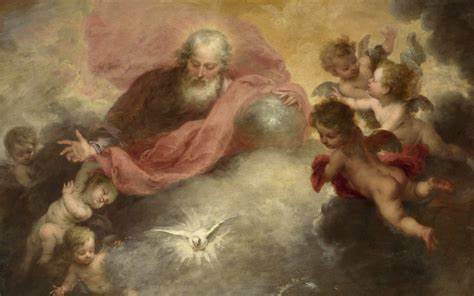
Your image of God is one of the most important aspects of your spirituality and, like a compass, points you in a specific direction. The reason why we pray, obey the commandments, fast, except suffering, give alms, attend church service, confess sin, hold on to hope, and practice the virtues are rooted in how you think about God.
God might be for you:
- A divine parent, lover, or friend who watches over you and with whom you want to spend time in prayer.
- A policeman who monitors your actions and is quick to catch any violations of the law.
- A heavenly Santa Claus who needs to be informed and coaxed.
- A creator who dazzles you daily with daffodils and daisies.
- The distant “man upstairs” who must be appeased with praise and worship.
- An avenger who has the need to balance the scale of justice with a tit-for-tat.
- A wisdom figure reminiscent of an elderly grandparent.
- An abiding presence that surrounds you like the air you breathe.
- The master puppeteer pulling the strings of life.
- A stern teacher of morality who commands obedience.
- A judge sitting on the bench of the court of last resort.
Our experiences as well as teachings about what makes God “happy” or “sad” all influence our earliest God image. Our various Christian denominations and Sunday worship sometimes reinforce, sometimes clarify, this image.
Culture also influences how we think about God. Some cultures in the east (for example, Chinese) emphasize divine transcendence, while others in the West (for example, Italian) delight in the closeness of God. A strict Irish upbringing emphasizes duty and compliance. Cultures traditionally viewed as primitive are more holistic, and apt to see God intertwined in nature as well as in the daily and mundane.
Inadequate God Images
Writing about the doctrine of the Trinity, Ronald Rolheiser reminds us of an important fact about God. “God, by definition” he writes “is ineffable beyond conceptualization, beyond imagination, beyond language…. No formula can ever capture the reality of God because God is too rich to ever be captured, even half adequately, in imagination, thought and word.
As human beings we need verbal descriptions and visual images of God. However, all descriptions and images—both scriptural and others—are always inadequate and incomplete. Augustine of Hippo states it this way: “if you understand it, it is not God”.
When we are unwilling to have our thoughts about God challenged and expanded, we risk losing our direction and being stuck in a cosmetic spirituality that not only fixates on externals but also cripples our adult spiritual formation.
We outgrow our images of God like we outgrow our toys and clothes. Or at least we should. That’s normal, natural, and even necessary. As our thoughts about God develop and enlarge through life experience and being challenged, our God image becomes capable of holding the tension found in life’s contradictions:
- the reality of suffering and God’s unconditional love.
- justice deserved and divine mercy rendered.
- the abundance of sin and the lavishness of grace.
Healthy images of God flower amid life’s paradoxes and mysteries. Unhealthy God images typically inspire fear and dread. They portray God as oppressive, stern, miserly, picayune, uncaring, unloving, and demanding strict obedience. They point to ourselves and keep us mindful of our sins instead of God’s ardent longing and enthusiastic invitation to a deeper relationship; they make us scrupulous and self-conscious about our thoughts and actions while driving us to obsess over perfection.
Healing such images or outgrowing them takes time, determination, patience, and grace.
The Jesus-Inspired Image of God
Changing deeply ingrained thoughts about God requires awareness and acceptance of the teachings of Jesus. He himself alluded to a number of healthy comparisons for God:
- a provider, (see supporting verses below)
- the shepherd,
- a vine grower,
- a welcoming father,
- a diligent woman,
- a generous giver,
- a host of an all-inclusive party,
- an eraser of debts for those who forgive.
Each of these images offers a ray of insight into the multifaceted, personal mystery of unconditional love Jesus revealed to us and called “Abba, Father.” These images all point to a God with an ardent longing to be in a deeper relationship with us.
Peace With God
The events of your life witness to a God who is lovingly concerned, caringly involved, and has an ardent longing for a deeper relationship with you. This new, healthier image of God validates, comforts, and inspires; it calls forth your very best.
You find your apprehensions, fears, and worries decreasing. The emotional investment in your reputation and what people think of you slackens and lessons. You no longer fear pain, blame, criticism, disgrace, or loss. Gratitude and Thanksgiving becomes second nature as you see the many and surprising ways God cares and provides.
This Jesus-inspired image of God facilitates the dissipation of the ego’s fixation with self-concern, self-image, self-gratification, and self-preservation while it reorients the direction in which you are heading.
If you found this post interesting, inspiring, informative, or useful, please follow us and share. Many more posts to feed your soul can be found on the Navigation Menu. God bless you.
Relevant Scripture
Do Not Worry (Luke 12:22-31)
The Lost Sheep (Luke 15:3-7)
The Vine and the Branches (John 15:1-2)
The Parable of the Lost Son (Luke 15:20-24)
The Parable of the Lost Coin (Luke 15:8-10)
Jesus the Bread of Life (John 6:32-33)
The Parable of the Great Banquet (Luke 14:15-24)
The Parable of the Unmerciful Servant (Matthew 18:23-35)
Reference
Becoming an Ordinary Mystic: Spirituality for the Rest of Us by Albert Haase, OFM
 Spiritual Meditations